We kept meeting the same gap. So we built the firm that closes it.
Before founding B2B Capital, we hired and evaluated M&A advisers ourselves – as founders, with our own companies on the table. And we kept meeting the same gap: deep transaction expertise on one side of the desk, but no one who had ever sat in the owner's chair on ours.
It left a question we could not put down: what goes undiscovered when an owner negotiates with one buyer and never tests what the company is worth to anyone else? We have since seen the answer from both sides of the same company. The transaction that explains why this firm exists →
B2B Capital is our answer. A firm where every senior dealmaker has started, scaled and sold a technology company of their own – and where the same people have spent years executing M&A and complex corporate transactions inside global institutions, across prior careers and more than $40 billion in combined value, representing and working inside many of the world's most active acquirers. The founder experience is why we understand what this decision actually is. The institutional experience shapes how we prepare companies, develop buyer theses and engage professional acquirers.
A founding partner, thirty minutes, no company name required.
What we refuse
-
We are not a full-service investment bank.
No capital-markets cross-sell, no lending, no trading. Advice is the entire product.
-
We are not a listing service.
A list of 100 buyers from a database is not a process – and a network is not a claim, it's a career. We run structured sale processes, competitive where the situation calls for it, with staged information and disciplined timelines. Where buyer relationships already exist, they were built over years; where they do not, the thesis has to earn the conversation.
-
We are not a volume shop.
A small number of mandates at a time; a partner leads every one.
-
We act for one side of every table.
We act for sellers and we act for buyers. On every engagement you know precisely whose interests we represent – and it is never both sides of the same transaction. How we handle conflicts →
B2B Capital sits hereThe sellerA founder or owner who engaged us.On a sell-side mandate we are here, paid by the seller, and the buyer has its own advisers.never bothB2B Capital sits hereThe buyerAn acquirer who engaged us.On a buy-side mandate we are here, paid by the buyer, and the owner has advisers of their own.Firm rule One side of every table. We act for sellers and we act for buyers; never for both in the same transaction.
-
We are not the right adviser for everyone.
Founders who've already agreed terms and need closing support; companies outside our depth; owners who want a number, not an outcome – we say so, and refer where we can.
The promise
To every client we act for, on either side of the table: we will know your business – or the business you intend to buy – well enough that the other side’s first serious questions are not the first time we have asked them, and we will use that understanding to protect your outcome – through the quality of our preparation, the precision of our process, and the honesty of our counsel.
The model
Senior concentration, institutional continuity. A named lead partner and a named second inside every mandate from day one, and a purpose-built execution system carrying the mechanical load so senior attention goes where judgment matters. Swiss-based, with clients worldwide – because the buyer able to justify the highest value may sit on another continent, and ours is a practice built to reach them at decision-maker level.
Careers
A small firm hires rarely and deliberately, and on one rule before any other: everyone who works on a mandate here has founded a technology company and sold it. Real deal exposure from the first month, working directly with the founding partners. Languages matter; curiosity matters more. The open roles, and how we hire →
Press & facts
For journalists and researchers: B2B Capital is an M&A advisory firm acting for founders, owners and acquirers – sell-side and buy-side mandates, never both sides of the same transaction – headquartered in Switzerland, with clients worldwide. Led by its co-founders. Every senior person has built and sold a company of their own, with collective experience across more than $40 billion of M&A and complex corporate transactions in prior careers. Most of that work has been in software and SaaS, applied AI, tech-enabled services, healthtech and industrial technology; the firm is not limited to those sectors. Enterprise values typically €10M–€150M. Headshots and published charts are reusable with attribution; every research artefact carries its methodology, author, and dates. On-record contact: Travis Callahan, Co-Founder & Partner · travis@b2bcapital.ch.
Careers
We are growing on purpose: three roles are open, each for someone who has already founded and sold a technology company, and the standard is the one on this site. See the roles →
Press & research enquiries
A founding partner answers journalists and researchers directly. Write to mail@b2bcapital.ch with “Press” in the subject; we reply within two business days.
If this is the firm you were looking for, the first call is the easy part.
Thirty minutes with a founding partner. No deck, no pitch team. We sign an NDA before you disclose anything.
We sold ours first.
Ask most advisers in this market what it feels like to sign the agreement that sells the company you built, and you will get a theory. This firm was built on the other answer. Every senior person here has founded a company, built it and sold it – twelve companies between them – and every one of them has also spent years inside M&A: a corporate acquirer’s own programme, institutional sell-side, restructuring, private equity. Three founding partners lead the mandates. Behind them is a full team – deal leads, financial preparation, analysts, transaction writers and designers, operations – assembled so that a founder-run business withstands the scrutiny a listed one would.
Thirty minutes. You leave knowing which of us would lead your mandate, and why.
Three founders. All three of them on a full mandate.
Read that again, because it is the unusual part. Not a partner who signs the engagement letter and reappears at closing: on every full mandate, all three founding partners are in it – the buyer case, the numbers, the process – because that is what each of them is actually good at, and no one of the three is good at all of it. One is the named lead, and you know which of us it is before you engage us. Where a senior deal lead runs the day-to-day, a founding partner is still accountable for the mandate and still in the buyer conversations; sometimes the founding partner runs the day-to-day himself.
This is arithmetic, not a promise. It is only possible because we run a deliberately small number of mandates at once, and it is the reason we would rather turn work away than dilute it. Ask us on the first call how many mandates are live. You will get the number.
One note on what follows. The transactions named below are named because they are public record – listed-company acquisitions and court-supervised restructurings. The private-company sales these three have run, and their own exits, are named on a call and not on a website. Where a name is missing, that is confidentiality, not a thinner record.
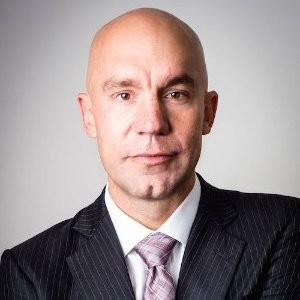
On your mandate: the buyer’s case – thesis, negotiation, structure.
Founder, corporate acquirer, M&A and restructuring lawyer. 110+ transactions closed, buy and sell side.
LinkedIn →Full record ↓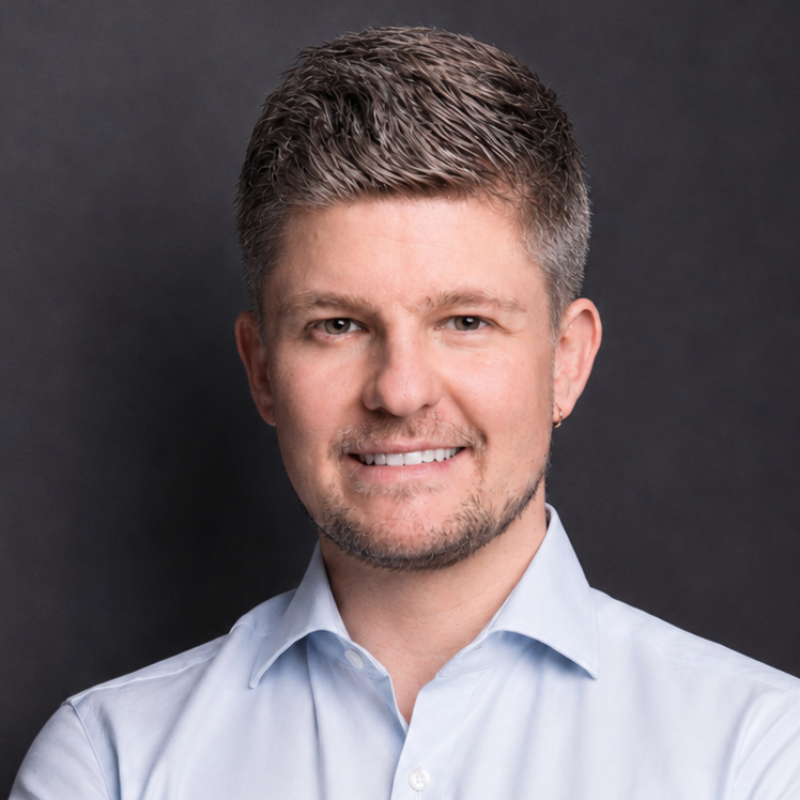
On your mandate: the numbers – valuation, financial preparation, the data room.
Founder and operator, and fifteen years of institutional M&A. A trained economist.
LinkedIn →Full record ↓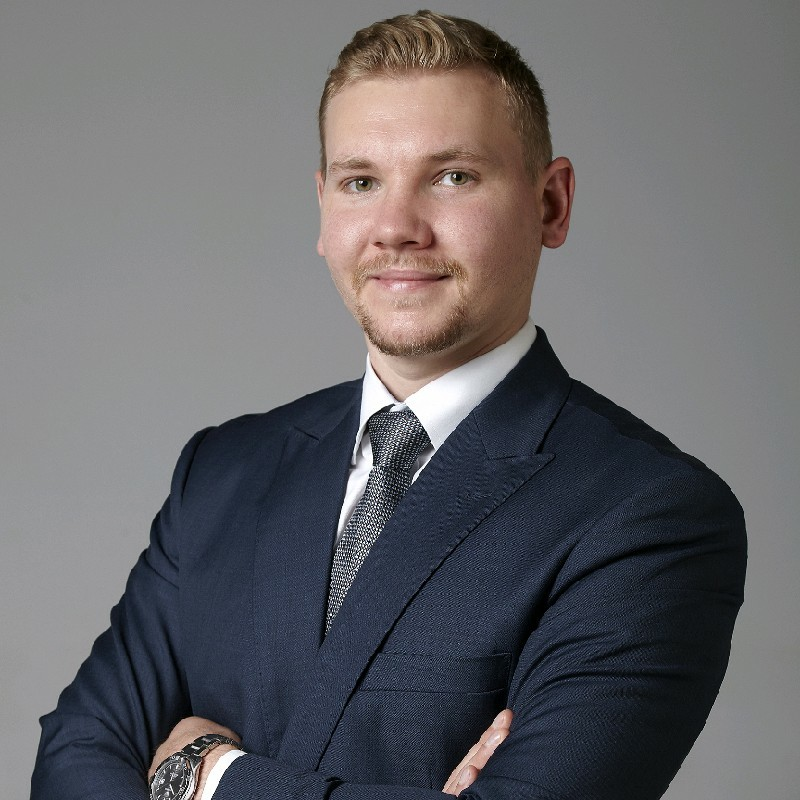
On your mandate: the process – execution, buyer coordination, the timetable.
Founder and operator three times over, and ten years in private equity and M&A, both sides of the table.
LinkedIn →Full record ↓The record behind each of them.
Travis CallahanCo-Founder & Partner · the full record
Travis Callahan
LinkedIn → Co-Founder & PartnerFounder · corporate acquirer · seller · M&A and restructuring lawyer
On your mandate: the buyer’s case – buyer thesis, negotiation strategy, structure, and the internal logic behind what an acquirer’s committee can actually approve. He does not hand a mandate to anyone else once it has started. If he cannot lead yours, we will say so before you engage.
Where his judgment comes from: to understand the buyer’s internal case before the buyer states it. More than 110 transactions closed across twenty-five years – some $30 billion of value, buy side and sell side, from single-digit-million bolt-ons to $4 billion acquisitions – including the years he spent inside a global acquirer’s own M&A programme. So when a term sheet arrives, he reads the approval, valuation and risk conversation sitting behind it: what the committee is told, where the flexibility hides, and which “standard terms” are nothing of the sort.
As a founder: three companies of his own, founded, built and sold, run out of Hong Kong, Switzerland, Luxembourg, Prague and the United States. He knows what the year after the wire actually feels like, including the parts nobody warns you about.
On the sell side: his own founder exits; the divestitures inside ABB’s programme, which is the half of a corporate M&A function that sells what no longer fits; and the sell-side mandates he leads here. Selling is not the second half of his career – it has run alongside the buying the whole way.
As an acquirer: Group Vice President for M&A and Venture Capital (Senior Legal Counsel) at ABB, negotiating and structuring transactions inside an acquisition programme that took in forty-one businesses in five years, around eight a year.
As counsel and counterparty: across restructurings, acquisitions and joint ventures he has been opposite, or alongside, more than a hundred institutional investors. When a fund of that kind explains its model to you, nobody on your side of the table is hearing it for the first time.
As a restructuring lawyer: US-bar qualified, and one of a team of five recognised with two International Financing Review awards for the Parmalat restructuring, the largest corporate insolvency Europe had seen. Restructuring is where you learn what a business is worth once the optimism has been stripped out of it. It is the discipline behind the downside questions we ask before a buyer gets to ask them – and the reason we will take a mandate that begins under time pressure, a covenant test or a shareholder split, and give you our first view on whether the timetable is achievable – and what would have to be true for it to hold.
AwardsGlobal Restructuring Deal of the Year – International Financing Review, 2005 · European Restructuring Deal of the Year – International Financing Review, 2005. Both for the Parmalat restructuring, as one of a team of five.
RestructuringsParmalat – $19B (2005) · Delta Air Lines – $28.3B of liabilities (2005) · US Airways – $8.8B (2004) · Scotia Pacific – $740M of timber notes (2007) · Corporación Durango – $647M, the landmark Mexican concurso mercantil (2005).
ABB, 2010–2014Programme transactions during his tenure, shown for the scale of the programme he worked inside. A named transaction here is not a claim that he personally worked on it unless stated. Buying: Baldor Electric $4.2B · Thomas & Betts $3.9B · Ventyx, more than $1B · Power-One $1B. Selling: Meyer Steel Structures $600M · Thomas & Betts HVAC $260M · the Full Service business. Forty-one businesses acquired across the five years; the full programme is listed on Sources & evidence.
Institutional counterpartiesAs counsel, counterparty or joint-venture partner – never as their adviser – more than a hundred institutional investors and capital providers – the names that recur across sponsor-backed acquisitions, restructurings and complex corporate transactions – among them Cerberus, Contrarian Capital, KKR, Blackstone, BlackRock, New York Life, Marathon Asset Management and Ontario Teachers’.
Boston College Law School · Trium Global Executive MBA (NYU Stern · London School of Economics · HEC Paris) · Executive Program, University of St. Gallen
Sebastian KoeppCo-Founder & Partner · the full record
Sebastian Koepp
LinkedIn → Co-Founder & PartnerFounder · operator · investor · economist
On your mandate: the numbers – valuation, financial preparation, the quality-of-earnings work and the data room. His job is that every figure on your side of the table reconciles before a buyer’s analyst tries to make it not.
Where his judgment comes from: to make the numbers hold. A trained economist with more than fifteen years of M&A experience at every level, and more than a hundred closed transactions – over seventy on the sell side, more than twenty on the buy side, and more than ten capital raises. He brings the financial discipline of someone who has run institutional M&A, the founder instinct of someone who has built and sold three companies of his own, and the board-level judgment of someone who evaluates companies for a living.
As a founder: three exits of his own.
As an operator: he went into a distressed technology business as a member of its executive team, stabilised it, and drove the process that ended in its sale – the internal architect of that outcome.
Inside institutional M&A: fifteen years at every level, including over $1 billion of M&A led inside one of Switzerland’s largest companies.
As an investor and adviser: he founded his own M&A advisory practice, built a record of selling companies for their founders, and is a partner in a venture capital firm.
The record, in numbersMore than 100 closed transactions: 70+ sell-side · 20+ buy-side · 10+ capital raises. Fifteen years of institutional M&A, including over $1 billion led inside one of Switzerland’s largest companies. Three exits of his own. Partner in a venture capital firm.
Selected transactionsThe sale of the business he stabilised, to a NASDAQ-listed acquirer · founder-side sales run through his own advisory practice, in industrials and technology · his own three exits. Private-company transactions under confidentiality: named in conversation, not published.
University of St. Gallen · fluent Spanish
Ryan O’SullivanCo-Founder & Partner · the full record
Ryan O’Sullivan
LinkedIn → Co-Founder & PartnerFounder · operator · investor
On your mandate: the process – execution from the first call to the final signature: buyer coordination, the question-and-answer discipline, and a timetable that holds from preparation to wire.
Where his judgment comes from: because founders feel the difference between a firm that advises and one that executes. He has built, scaled and sold three times, in three different roles, and he knows what it takes to get a founder to the other side.
As an operator: chief operating officer of a technology firm he joined in its earliest days, grown to a hundred people across three countries before its exit; and, at a start-up where he and the technical founder were the only two people in the building, the commercial engine behind the growth that ended in a major acquisition.
As a founder: he co-founded a company that expanded into investments and operations across five countries and sold it, and exited a company of his own in 2023.
In transactions: ten years in private equity and M&A, on both sides of the table.
Selected transactionsMore than $200 million of M&A and property transactions across seven deals · a Series A featured on CNBC and the sale that followed · the exit of the three-country technology business he ran as chief operating officer · his own exit, 2023. Private-company transactions under confidentiality: named in conversation, not published.
HEC Paris, Executive MSc
What this team had done before it was ever your adviser.
A transaction has six chairs. This team has sat in all of them.
Elsewhere on this site we describe the four seats at a transaction table. Across this team, two more are occupied – the operator who has run a business through a sale, and the investor who has priced one. Six careers, brought to the same mandate. That is not a biography point; it is why the questions get asked in the right order.
- The founder
Every senior person here has built a company and sold it. They know what the year after the wire feels like, and that a win is not only a number – it is which buyer, what happens to the people who built the business with you, and what the name means in five years.
- The operator
Chief operating officers and presidents who have run the business through the period when a sale process is trying to consume it. It is why the process is built to take days of your time rather than months.
- The corporate acquirer
Years inside a global acquirer’s own M&A programme: how a committee is persuaded, how a walk-away price is set, which diligence findings move a number and which are noise.
- The M&A lawyer
US-bar qualified, across restructurings and acquisitions at scale. We lead the commercial transaction; your counsel leads the legal advice and the drafting. Knowing exactly where that line falls is the point.
- The investor
Private equity and venture capital, including a seat on an investment fund’s board. When a financial buyer explains its model, nobody at your side of the table is hearing it for the first time – including when the deal is a majority recapitalisation rather than a sale, and you are still there afterwards holding the rollover.
- The adviser
Institutional sell-side M&A, and advisory practices these partners built themselves. The craft is the last of the six seats, not the first – deliberately.
What a founder anywhere in our €10M–€150M range gets from the numbers above
The fear is a reasonable one, so here it is plainly: a firm whose partners have worked on $4 billion transactions might take your mandate and give you its third-best person. This firm was built the other way round. Mandates between €10M and €150M are the work. The large transactions are where the training came from.
The core disciplines do not change with size: the investment case, the valuation, the diligence, the risk allocation and the approval. What changes is how many people are involved and how deep the documentation goes. A committee approving a €15M acquisition is running a smaller version of the same argument. What changes with size is not the buyer’s side of the table – it is yours. At the large end a seller has bankers, lawyers, a quality-of-earnings team and a communications adviser. At the size of business we work with, most founders have one adviser, opposite a buyer who has done this a hundred times.
So the commitment is specific: on a full mandate, all three founding partners work your transaction whatever its size, one of them named as its lead, and if we cannot staff your business that way we will not take it. On the first call, ask which of us led the mandate closest to yours in size and sector. You should get a straight answer, not a range.
The rest of the team is not support staff. It is how a small firm brings institutional transaction discipline to a founder-run process.
Three founding partners lead the mandates. Behind them sits a full transaction team, and it is deliberately built the way a large firm’s deal team is built – deal leads, financial preparation, analysts, a transaction communications group, and one person who owns process control – because a buyer’s diligence team does not scale down its scrutiny just because the seller is founder-run. Two things are true of every senior person on this list: they have founded a company and sold it, and they spent years inside M&A before they arrived here. The team was assembled for complementary operating and transaction judgment, not for pedigree.
We do not publish their names, for the same reason we do not publish client names: they work on live, confidential mandates, and several are known in their own markets. What we will do is tell you exactly who is on yours, by name, with their record, on the first call. And if you have run a process before that did not complete, say so: we will read the old process before we talk about a new one, and often that is the whole conversation.
- Senior deal leads – three of them
They run mandates alongside the partners. Every one has founded a company and sold it, and every one spent years inside M&A first – among them a former chief technology officer of a multinational financial-services group and co-founder of a multinational fintech, now a technology M&A specialist with a record of exits. This is the bench that means a mandate never depends on one person’s calendar.
- Financial preparation and quality of earnings
Led by a chartered accountant who is also a company founder, an auditor of listed companies earlier in his career, and the founder of a financial advisory and corporate-services firm operating across Asia and Europe. He is the reason your numbers reconcile before a buyer’s analyst opens them. How often a diligence finding has moved a price on our mandates is a countable thing: ask on the call and you will get the count and the denominator.
- Transaction analysts
They build the models, the buyer maps and the data room, and they know deal mechanics rather than spreadsheet mechanics. Their work is what lets a founder answer a buyer’s question in a day instead of a fortnight.
- Transaction communications
Writers and designers who build the memorandum and the management presentation. This is not a marketing function. Clear presentation reduces the work a buyer has to do to understand your business, and confusion is expensive at exactly the wrong moment – the moment a buyer decides how much risk to price in.
- Operations and process control
One person owns operational delivery across every live mandate: process tracking, document flow, milestones, and the weekly written status that goes to you and your board whether the news is good or not. Nothing in a process is allowed to go quiet by accident.
Across the senior team: four executive MBAs, a Juris Doctor, an MS in Entrepreneurship & Innovation, and master’s degrees in Economics and in Banking & Finance – London School of Economics, HEC Paris, NYU Stern, the University of St. Gallen, Boston College. We list them once, here, because the founder record above is the credential that matters; these are the ones that say we also did the other kind of homework.
Three things about selling a company that every one of us learned the expensive way.
Talk to a founding partner.
Thirty minutes with one of the three partners above – not an intake team. On that call we tell you which of us would lead your mandate and why. Under NDA, no engagement attached, and you can start without naming the company.